30+
Years Of Experience
Your AC Runs But Doesn't Cool
AC Not Cooling in Lexington for low refrigerant, dirty coils, and airflow issues
If your AC is running but not cooling, the compressor and fan are working but the system isn't removing heat from your home, and that disconnect usually points to low refrigerant, coils covered in dirt that can't transfer heat efficiently, or blocked airflow that prevents the evaporator from absorbing warmth from indoor air. White Knoll Heating and Cooling diagnoses AC systems that run continuously without lowering the temperature, and the fix depends on whether refrigerant leaked out, whether outdoor coils are caked with cottonwood seeds and pollen common in Lexington, or whether ducts and filters are restricting air movement. When the system runs for hours without changing the thermostat reading, something in the heat transfer process has failed.
Before calling for service, check that your thermostat is set to cool rather than fan-only mode, verify the outdoor unit is running and the fan blades are spinning, and inspect the air filter to confirm it isn't completely clogged with dust. If the outdoor unit is silent or the filter looks like solid gray felt, those are problems you can address immediately and may restore cooling without a service call.
Arrange a diagnostic visit to measure refrigerant levels, inspect both coils, and identify what's preventing your system from cooling..
What We Check When Your AC Won't Cool
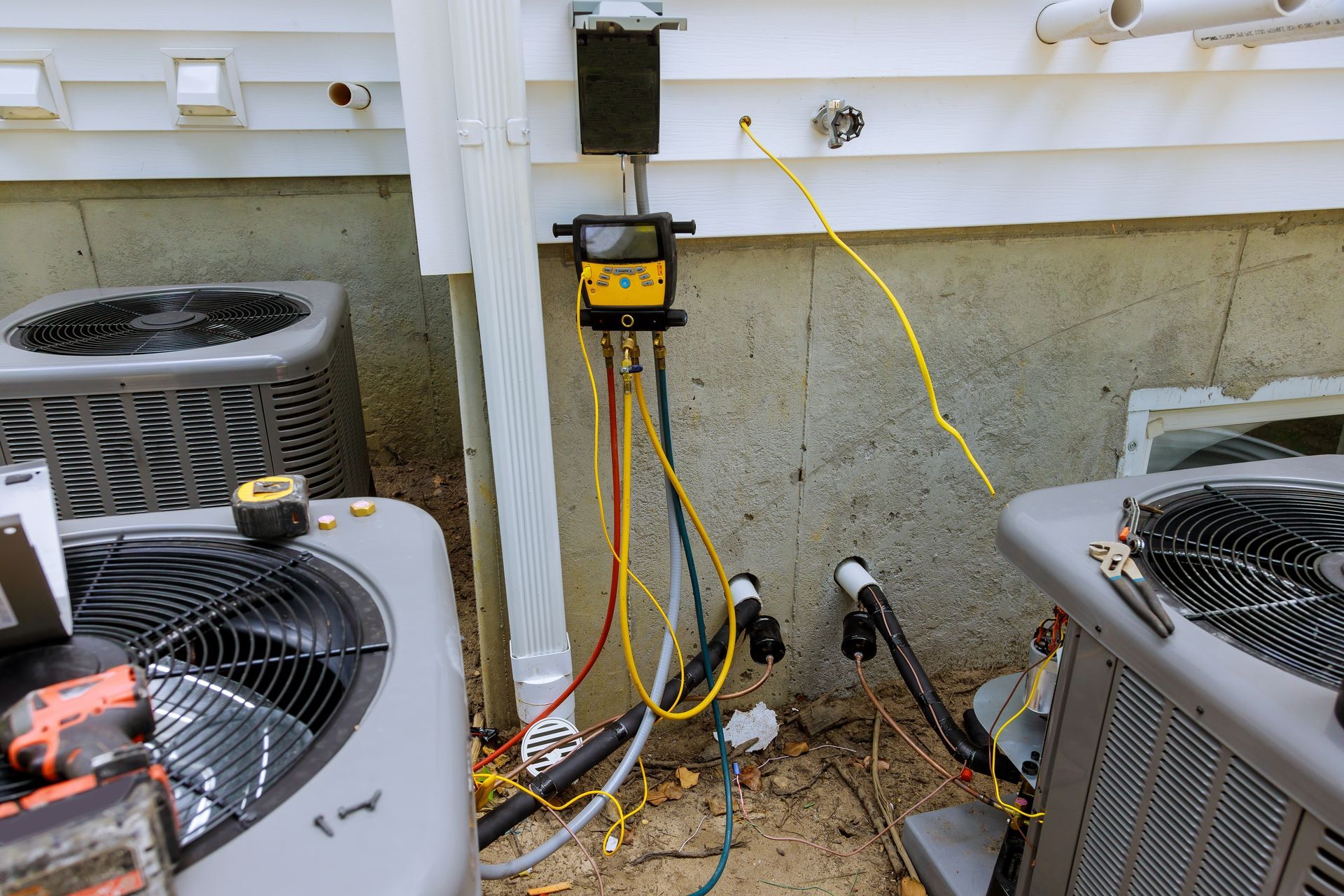
When your AC runs but fails to cool, the technician connects manifold gauges to the service ports and checks whether refrigerant pressures fall within the manufacturer's specified range for current outdoor temperature—low pressure on both sides indicates a significant leak, while mismatched pressures point to a restriction or failed component. The evaporator coil inside the air handler and the condenser coil outside both get inspected for dirt buildup that insulates the metal fins and prevents heat exchange, and airflow is measured at the supply registers to confirm the blower is moving enough air across the coil.
Once the problem is identified, you'll notice immediate differences after the repair: the supply vents blow noticeably colder air, the system runs for shorter cycles instead of continuously, and the indoor temperature drops steadily rather than hovering at the same reading for hours. A system with restored refrigerant levels and clean coils typically brings a home down to the thermostat setting within thirty to forty minutes, and the compressor shuts off once that temperature is reached instead of running nonstop.
This service addresses the mechanical or refrigerant issue preventing cooling but doesn't include ductwork modifications, thermostat replacements, or insulation improvements that may also affect system performance. If your ducts leak conditioned air into an attic or your thermostat is positioned where sunlight hits it directly, those factors can still limit how well the system cools even after the repair is completed.
Common Questions About AC Cooling Problems
Homeowners often want to understand what stops an AC from cooling and whether the problem will recur after it's fixed.
What causes an AC to lose refrigerant?
Refrigerant escapes through small leaks in the coil, line set, or service valves—often from vibration, corrosion, or a poor connection made during installation—and a system that's low on refrigerant today will continue losing it unless the leak is located and sealed before the system is recharged.
How dirty do coils have to be before they stop cooling?
Even a thin layer of dirt reduces heat transfer efficiency, but when coils are covered enough that you can't see the metal fins between the buildup, airflow is restricted and the system loses most of its ability to move heat, which is common in Lexington during cottonwood season when coils clog with fibers in a matter of weeks.
Why does low airflow prevent cooling?
The evaporator coil relies on a steady flow of warm indoor air to absorb heat; when airflow drops due to a clogged filter, closed vents, or a weak blower motor, the coil doesn't warm up enough to evaporate the refrigerant properly, and the system can't transfer heat out of your home.
When should I call immediately instead of waiting?
If the outdoor unit is making grinding or buzzing sounds, if you smell burning plastic near the air handler, or if ice is forming on the refrigerant lines, turn the system off and call right away—running it in that condition can damage the compressor and turn a repair into a replacement.
Can I add refrigerant myself?
Refrigerant handling requires EPA certification, specialized gauges, and recovery equipment; adding refrigerant without locating and repairing the leak wastes money and harms the environment, and an overcharged system can damage the compressor just as easily as an undercharged one.
White Knoll Heating and Cooling identifies why your system stopped cooling and explains the repair in detail before starting work. Call to schedule a diagnostic appointment and get your AC working properly again.