30+
Years Of Experience
Hidden Leaks Waste Conditioned Air
Ductwork Repair in Lexington for systems losing airflow to leaking connections and unsealed joints
Air ducts develop leaks at connection points, seam separations, and penetrations where conditioned air escapes into attics, crawlspaces, and wall cavities before reaching living spaces. White Knoll Heating and Cooling repairs ductwork in Lexington homes where HVAC systems run constantly but fail to maintain temperature, rooms receive uneven airflow, or utility bills climb without corresponding changes in thermostat settings. Leaking ducts force systems to work harder, running longer cycles to compensate for the 20 to 40 percent of conditioned air that never reaches its intended destination, and the problem worsens over time as vibration and thermal expansion enlarge initial gaps.
Ductwork problems show up as weak airflow from certain registers, temperature differences between rooms served by the same system, excessive dust accumulation near vents, and whistling sounds when the blower operates. These symptoms indicate that pressurized supply air is escaping through compromised duct sections rather than traveling through the intended distribution path.
Schedule a duct inspection to identify leak locations and quantify airflow loss before your system sustains additional wear from compensating for compromised distribution.
Where Duct Leaks Occur and What That Costs
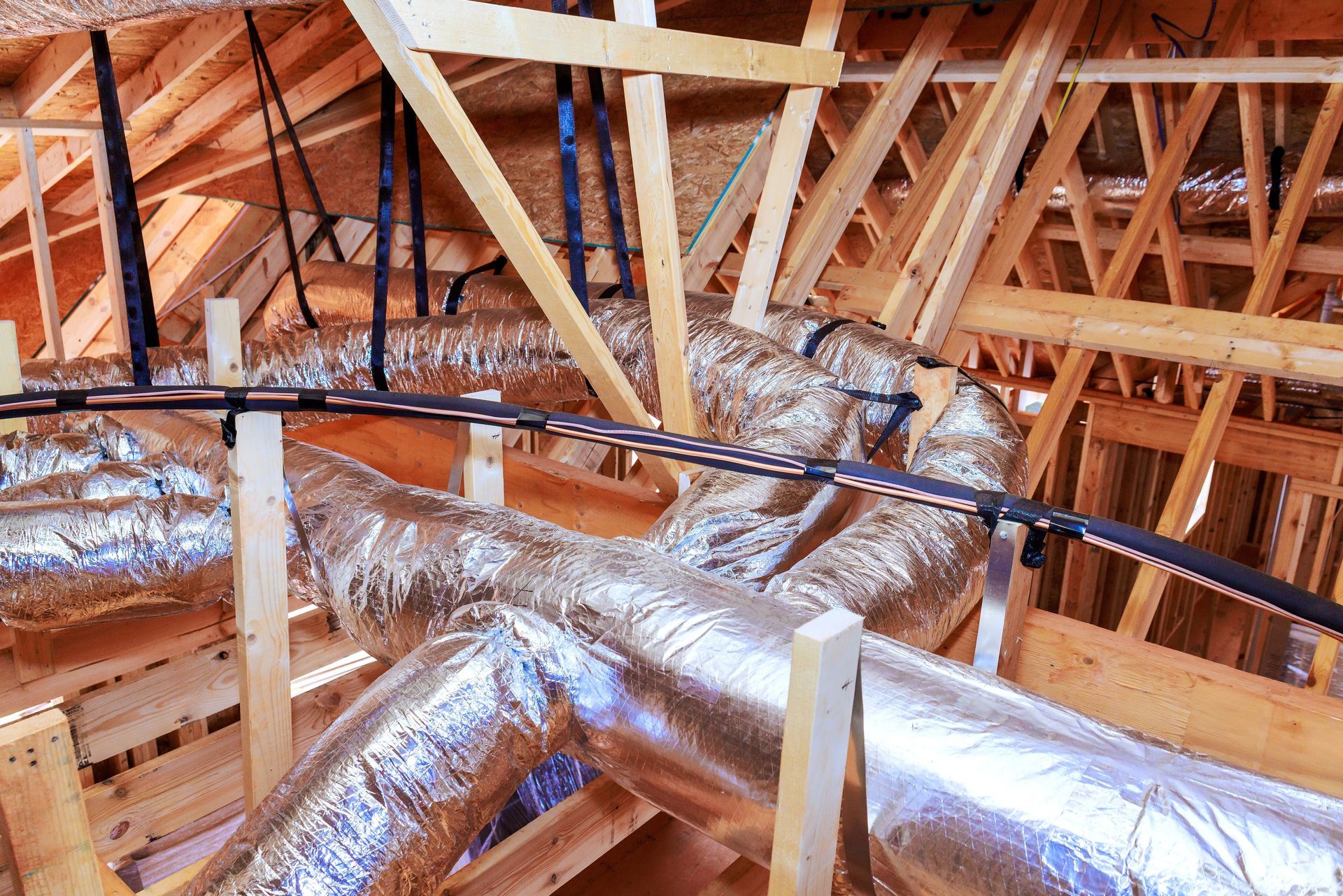
Duct connections separate at boot joints where flexible duct attaches to register boxes, at plenum connections where main trunks meet the air handler, and along longitudinal seams in rectangular metal ductwork that wasn't properly sealed during installation. Flex duct develops tears where it contacts sharp framing members or compressed insulation, while rigid ductwork corrodes at condensation points where warm humid air contacts cold surfaces. Identifying these leaks requires pressurization testing that measures airflow loss under operating conditions, since many gaps aren't visible without removing insulation or accessing confined spaces.
Once ductwork is properly sealed, you'll notice stronger airflow at registers that previously delivered weak output, more consistent temperatures between rooms, shorter system runtime to reach thermostat settings, and lower monthly cooling costs as the HVAC system stops conditioning air that escapes before delivery. Dust infiltration also decreases because negative pressure no longer pulls unconditioned attic or crawlspace air into the return side of the system.
Duct repair involves mechanical fastening at connections, mastic sealant application at seams and joints, and insulation replacement where thermal performance has degraded. Simply wrapping connections with standard cloth duct tape fails quickly under thermal cycling—proper sealing requires mastic or metal-backed tape rated for HVAC applications, applied after mechanical connection is secured.
What Homeowners Need to Know About Duct Repair
Questions about ductwork typically arise when homeowners notice performance problems that persist despite HVAC equipment functioning properly, pointing to distribution issues rather than mechanical failures.
How can I tell if my ducts are leaking?
Rooms with weak airflow despite working registers, temperature variations between spaces on the same floor, excessive dust near vents, and HVAC systems that run continuously without reaching setpoint all indicate significant duct leakage affecting system performance.
Where do air ducts typically leak the most?
Connection points where flex duct attaches to boots and plenums account for most leakage, followed by longitudinal seams in rectangular metal ductwork and penetrations where ducts pass through framing—areas that experience the most movement and stress during thermal expansion cycles.
Can duct leaks really increase my utility bills that much?
Studies consistently show that residential duct systems lose 25 to 40 percent of conditioned air to leakage in typical installations, meaning your HVAC system must produce significantly more heating or cooling than your home actually receives, directly increasing energy consumption and operating costs.
Why don't standard duct tape repairs last?
Cloth-backed duct tape adhesive fails under the thermal cycling that occurs in attic ductwork, where summer temperatures exceed 140 degrees and winter temperatures drop below freezing—conditions that cause adhesive breakdown within months of application.
Is duct repair something I should do before replacing my HVAC system?
Sealing ductwork before system replacement ensures new equipment is correctly sized for actual delivered airflow rather than being oversized to compensate for leakage, preventing the short-cycling and efficiency problems that occur when systems are larger than necessary for proper load.
White Knoll Heating and Cooling uses pressure testing to locate and quantify duct leakage before beginning repairs. Contact us to evaluate your ductwork integrity and restore proper airflow distribution throughout your home.